From rooftops to resilience: the mission to make Sussex energy-neutral by 2040
Natasha Bridge is a Business Manager for the Greater Brighton Economic Board, with a co-ordination role for Sussex Energy, a regional collaboration to accelerate the transition to locally generated, zero-carbon energy. She explains how the mission aims to make Sussex energy-neutral by 2040 – and why it matters for residents, businesses and the regional economy.
Can you tell me about the Sussex Energy Mission?
The Sussex Energy Mission was launched in summer 2024 by the Greater Brighton Economic Board. It's a mission to reach energy neutrality in Sussex by 2040 – that means producing as much zero-carbon energy in Sussex as is consumed.
At its heart, it's about how we power our homes, businesses and transport in a way that strengthens the local economy while reducing emissions and reliance on fossil fuels. The mission builds on significant work already underway across the region– it's now about accelerating that work, connecting activity, helping it grow, and giving it greater visibility and scale.
It resonates with people because it can help provide savings to local residents and businesses. Having more locally produced energy will also increase energy resilience, leaving us less vulnerable to geopolitical impacts on energy supply and prices, like we're seeing right now.
We're at a unique point in time where the energy system is transitioning from fossil fuels controlled by large corporates, with the money kept within those worlds. We have an opportunity to shift that – to retain more economic value within Sussex, rather than exporting it elsewhere, while supporting new jobs and skills.

How does it work in practice?
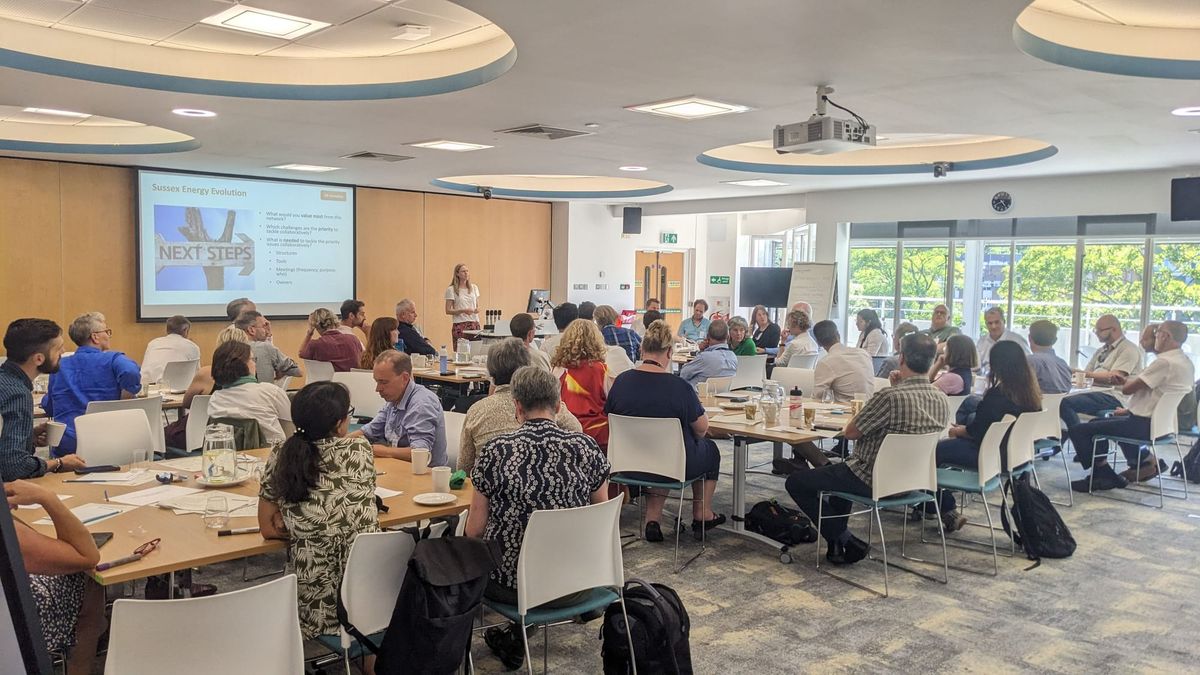
In practice, Sussex Energy acts as a regional convener. There's lots of great delivery already on the ground – the local authorities, universities, NHS Sussex, community organisations and businesses too. We began by bringing them together to strengthen their collaboration and to define the role a regional convener could play.
Representatives from these organisations meet monthly forming a partner group that actively shapes Sussex Energy work. They meet alongside representatives from the Greater South East Net Zero Hub, linking us to national policy and wider regional activity, and the South Downs National Park Authority, providing expertise on land use and environmental considerations. Additionally, there is a Sussex Energy Forum LinkedIn group to allow for ongoing collaboration between anyone working or interested in this field. The Forum’s in person meetings are hosted by the University of Sussex’s, Sussex Energy Group, whose research expertise helps us stay close to emerging policy and ensures questions of fairness and community value remain central to the conversation. As a result of inputs from these groups, there are several workstreams in progress.
A map of energy decarbonisation projects (e.g. renewable energy generation, retrofitting) in Sussex is being developed to help build a visible identity for Sussex in energy transition work.
Two key pieces of work are being commissioned: a programme to identify and prioritise the most viable large-scale solar sites in the region, and a study exploring how we attract and circulate long-term investment and funding for decarbonisation – including what a regional decarbonisation fund could look like.
A brief for the Sussex & Brighton Strategic Authority is being developed to set out the short- and long-term opportunities for energy decarbonisation in Sussex, in addition to potential investment opportunities. We’re engaging with the Strategic Authority to ensure this joined-up work on energy informs their priorities and to encourage them to support it going forward.
What does progress on the Sussex Energy Mission actually look like for Sussex residents in their day-to-day lives?
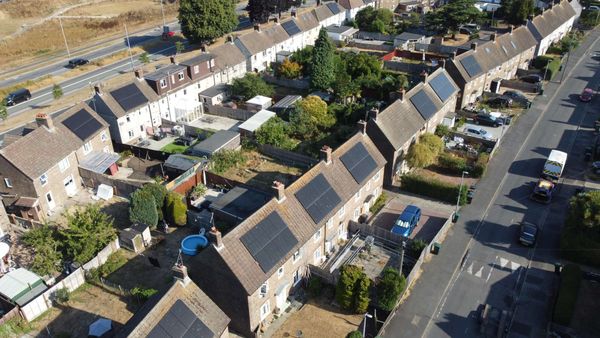
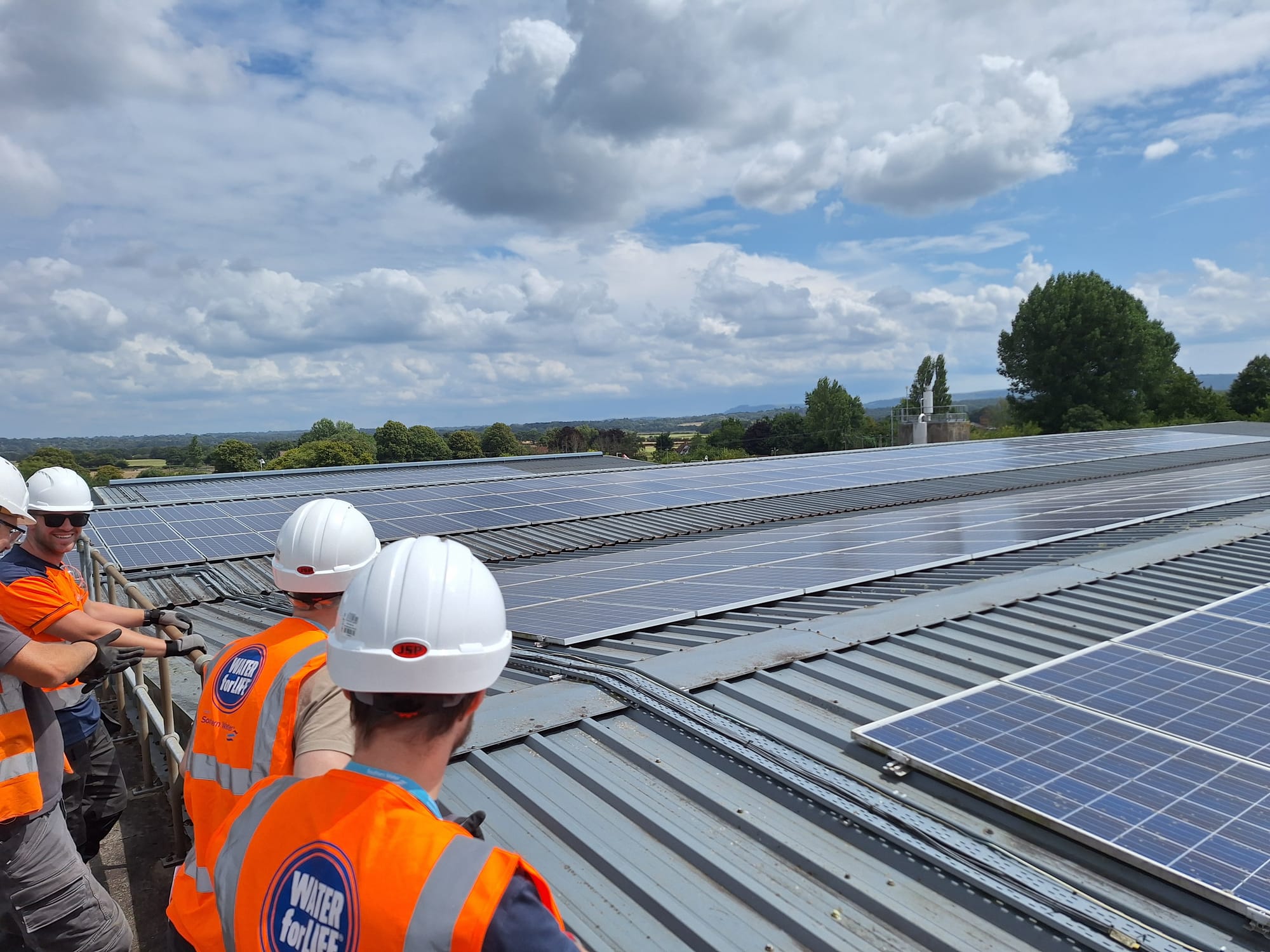
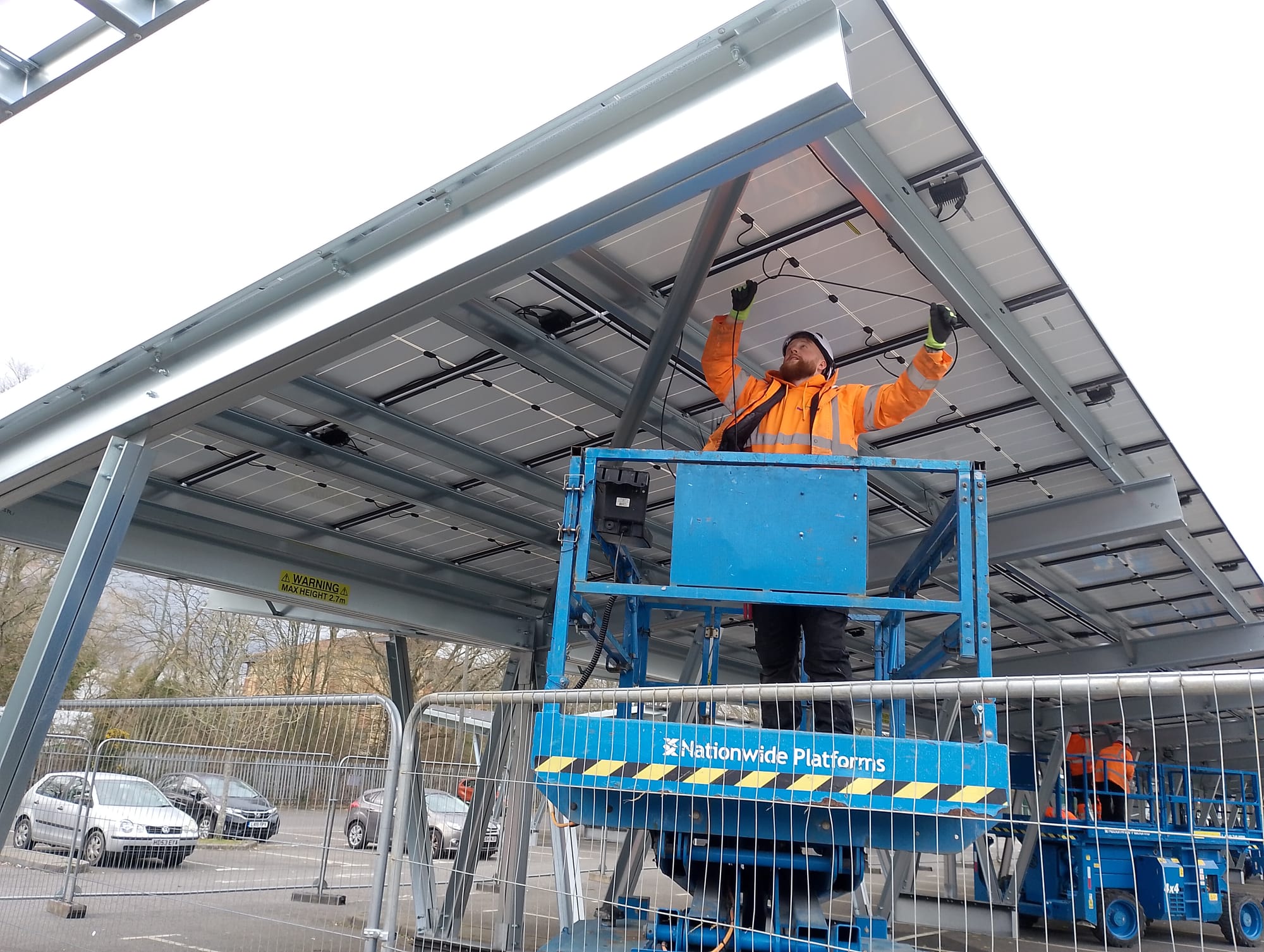
For residents, progress is about visible, practical change. It’s seeing more solar panels on rooftops, more electric vehicles on the roads, with reliable and convenient charging at home, at work and in public spaces, and more buildings – from schools to leisure centres – powered by locally generated energy.
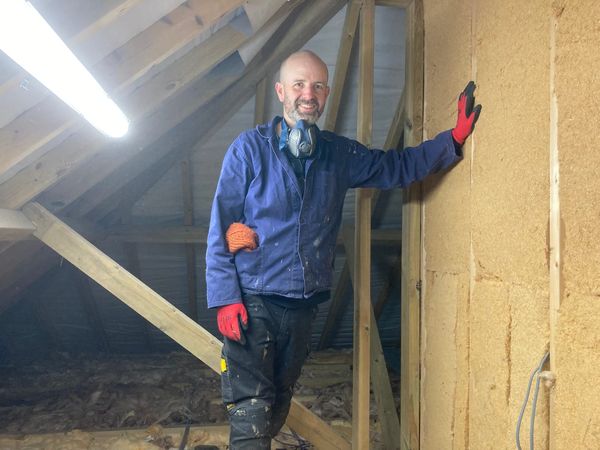
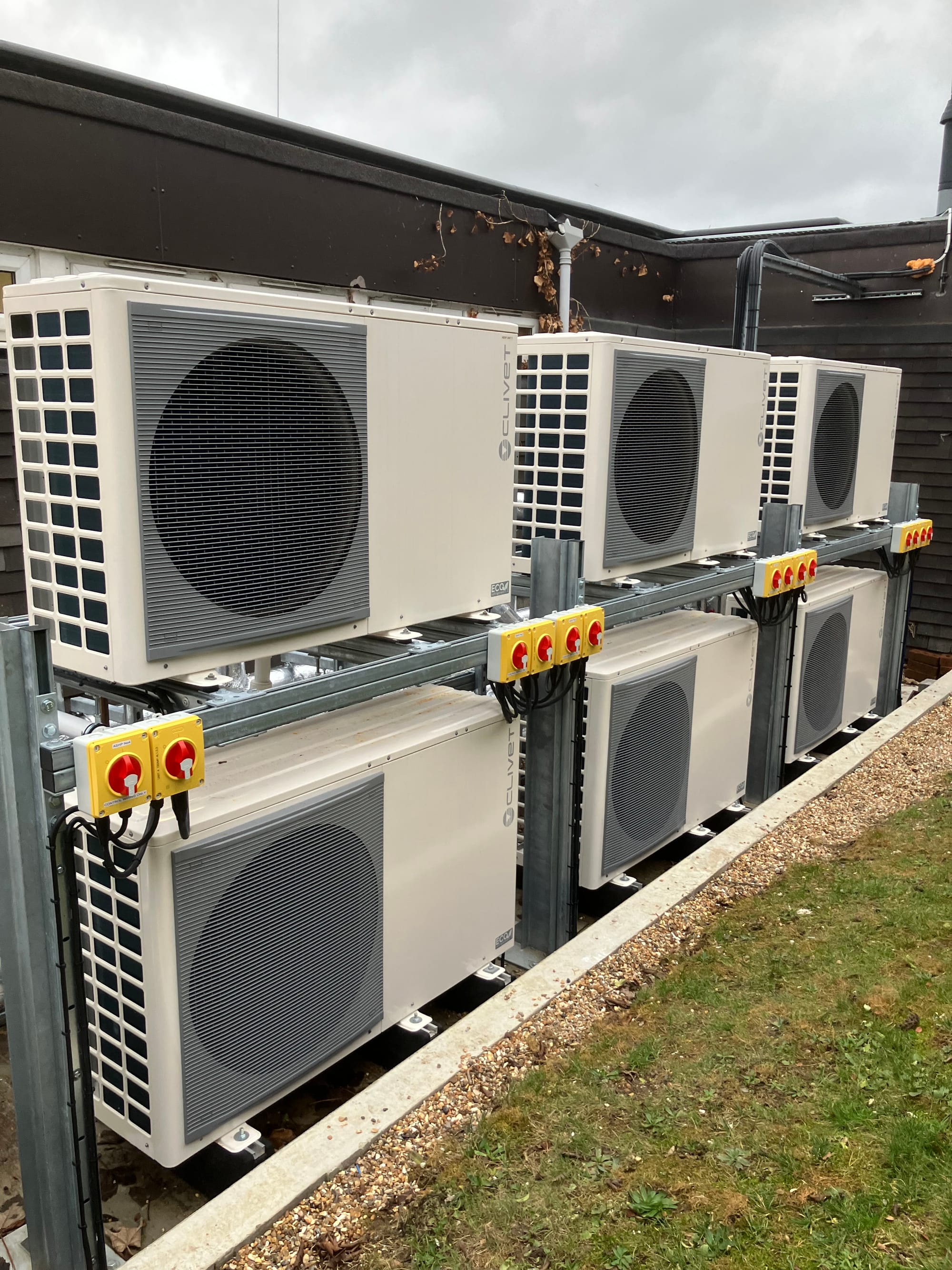
It’s also about how homes are heated and insulated. Over time, more households will move towards low-carbon heating, better insulation and smarter energy use – reducing both energy bills and emissions.
At a community level, it means having more opportunity to shape local energy projects – whether that’s through community energy schemes, local consultations, or investment opportunities – so that development reflects what works for that area.
There’s also a wider economic impact. As the transition progresses, people will see more local jobs and businesses linked to retrofit, renewable energy and energy services.
Ultimately, success means energy becoming something that feels more local, more visible, and more within people’s influence – rather than something distant and externally controlled.
The cost-of-living angle feels important – energy bills have hit people hard. How central is affordability to the mission, and how does it sit alongside the net zero goals?
Reducing energy costs is important to the mission, and it sits alongside net zero goals rather than competing with them. They reinforce one another.
Measures such as insulation, rooftop solar, batteries and clean heating can cut bills as well as emissions, and government analysis suggests they can save some households hundreds of pounds a year.
At the same time, this is also an economic opportunity. The UK’s net zero economy is already growing around three times faster than the wider economy, and investment in retrofit, renewable energy and EV infrastructure creates skilled jobs, strengthens local supply chains and attracts private finance. In Sussex, the University of Brighton’s Clean Growth UK programme has supported SMEs to secure over £2 million in R&D funding and created over 300 jobs.
So, this is not simply about reducing emissions. It is about warmer homes, lower bills, greater resilience to fossil fuel price shocks, stronger local supply chains and ensuring more of the economic value created by the energy transition stays within Sussex.
What's the biggest obstacle you're facing right now?
The main challenge is navigating a period of transition, as new regional structures are established through devolution.
This is also a significant opportunity. A Sussex-wide strategic authority provides the scale needed to coordinate activity, attract investment and accelerate delivery in a way that hasn’t previously been possible.
In the meantime, the focus is on maintaining momentum – ensuring that the strong collaboration already in place across local authorities, businesses, community organisations and public bodies continues to develop.
We’re working to position Sussex Energy as a delivery-ready, investable programme within the new Strategic Authority, so that when those structures are fully in place, the region is ready to move at pace.
If Sussex Energy succeeds, what does the region look like in 2040?
Sussex would be recognised as a region where the energy transition is actively delivered – underpinned by strong collaboration across local authorities, businesses and communities, and a growing base of green energy jobs and companies.
We would see widespread rooftop solar, alongside larger-scale infrastructure such as onshore wind or solar farms where appropriate. Communities would have a clearer understanding of their energy use and greater ability to shape how energy is generated locally.
A key principle is local ownership – whether through community energy or public sector investment – ensuring financial benefits are retained and reinvested locally, including supporting action on fuel poverty. Alongside this, I would expect to see a fully functioning regional decarbonisation fund, attracting investment into Sussex and circulating it within the local economy.
The energy transition is often described not as a single system being turned by one actor, but as a collective shift – like a murmuration, where many small actions combine to create system-wide change.
What can individuals and local businesses do right now to be part of this?
There are a number of practical ways individuals and businesses can get involved, and it’s important to recognise that not all of them require significant upfront investment.
For residents, improving energy efficiency remains one of the most effective steps – but this does not have to mean major upgrades straight away. Simple actions such as reducing energy waste, using smart controls, and better understanding energy use can all make a difference. For those considering larger changes like insulation or low-carbon heating, there is support available to help with costs. National schemes such as the Boiler Upgrade Scheme provide grants towards heat pumps, while programmes like ECO4 and locally delivered retrofit schemes can subsidise insulation and efficiency improvements for eligible households. The government provides a central overview of available support through its “Help to Heat” guidance, which brings together the main national grants and schemes in one place.
For businesses, support is also emerging to help navigate the transition without needing large internal resource. Initiatives such as the Making Business Greener Campaign provides free access to sustainability expertise – effectively acting as a “virtual sustainability officer” to help SMEs measure their carbon footprint, develop plans, and respond to growing regulatory and procurement requirements.
There are place-based funding opportunities. Locally, schemes such as the Newhaven Enterprise Zone Business Growth Fund can support investment in low-carbon equipment, vehicles or processes for Newhaven businesses, while the Rampion Community Benefit Fund (open for a limited time each year) provides grants to community organisations in the area for energy efficiency, renewable energy and fuel poverty initiatives. District-level schemes are also available, such as the Horsham District Community Climate Fund, which supports community groups with grants for projects ranging from energy reduction and renewable installation to biodiversity, transport and wider environmental improvements.
For those unsure where to start, Sussex Energy useful resources page on the Greater Brighton website has brought together a set of links for residents, businesses and sustainability professionals, including pointers to local authority advice, Citizens Advice, and local community energy organisations that can provide trusted, practical support. To stay up to date with opportunities, funding and local activity, people can also follow the Sussex Energy LinkedIn page, where updates on energy projects, events and support programmes are regularly shared.

Beyond physical upgrades, participation can take many forms. Getting involved in local community energy initiatives, responding to consultations, or working with local partners can help shape projects and ensure they reflect local needs.
More broadly, awareness and engagement matter. The transition will not be driven by a small number of large projects alone, but by many smaller actions – including those that are low-cost, no-cost or supported through grants – which together help build momentum and unlock wider change.
Is there anything else you'd like to add?
I’ve been struck by the strength and depth of activity already underway across Sussex.
Our long-standing community energy organisations are a real asset – with around 60 employees, including national experts, and over £23 million of projects delivered, often with limited resources.
Alongside this, we’re seeing significant infrastructure and innovation: Rampion Wind Farm already powers around 350,000 homes, with further expansion planned; Worthing’s heat network is expected to cut around 3,000 tonnes of CO₂ annually; and local authorities are generating renewable energy from assets such as solar on leisure centres, public buildings, schools and developing solar and battery farms on old landfill sites using surplus to fund public services.
We’re also building the skills pipeline for the future. Facilities such as Crawley College’s Green Village, Brighton MET’s net zero centre and East Sussex College Group’s Green Training Hub are equipping people with practical skills in retrofit, heat pumps and low-carbon technologies.
Taken together, this shows that Sussex is already delivering – and is well placed to scale. We are genuinely punching above our weight, and that story deserves to be told.